

The plan with my fertility specialist was to call her when my ovulation prediction kit indicated it was go time. These kits (OPKs in trying to conceive lingo) come in many different forms, some more simple than the rest, but I chose the tried and true ClearBlue Easy digital. With this test, it meant waiting to see a smiling face in the results window so that I could make a call.
Before I was actively trying to conceive, in the years between the obligatory sex education class, I thought that pregnancy and getting pregnant was so simple. Growing up in a pretty impoverished area in eastern Kentucky, I watched so many girls get pregnant by accident while we were in high school, and I think this set my early expectations somewhere near “how hard can it be?” Once I opened the trap door into the trying to conceive (TTC) world, I found out quickly just how wrong I’d been.
For example, while I knew that my body would release at least one egg every month (if everything worked correctly), I didn’t know that egg would only survive twelve to twenty-four hours if not fertilized. I didn’t know that realistically each month there’s only a window of about six days (at most – usually smaller) in which a person can conceive. I’m not sure how long I imagined each egg surviving, but definitely longer than a day. With that kind of timing, my thoughts immediately jumped to – how in the world does anyone actually get pregnant?!

I should back up and say that OPKs (which work by checking for a surge of luteinising hormone in urine) aren’t the only method people use when trying to conceive. Sometimes they’re used alone, but many people use multiple tracking methods – OPKs, basal body temperature, cervical mucus charting, and so many more, in combination or otherwise. It was overwhelming to read all of the things I could be doing, but based on the recommendation from my specialist, I decided to stick to OPKs alone. Because I had never been pregnant (and had never tried to get pregnant before), we had no reason to think that I had other challenges conceiving – basically my hurdle was a lack of sperm (or baby juice, baby batter, and a million other things that I’ve called it).
Every morning, I would wake up, pee on my stick of the day, and wait a few minutes for the result to populate. It was an exercise in patience and, more times than not, hilarity as I fumbled to open test strips with bleary eyes, sometimes bouncing from one foot to the other because I had to go and my hands couldn’t work quickly enough. I became so used to seeing a blank result in the window (meaning no LH surge, no ovulation), that the day a little smiling face did show up I had to take a picture of it (one I’m glad that I have now).
It was Saturday, September 9, 2018. I called my specialist and set an appointment to pick up my first straw of sperm (I purchased three) at 7:30 the next morning. September 10th would be our first attempt.
I was incredibly anxious that evening, as I always am when I’m not sure what to expect in a situation (I might have control issues), let alone something as monumental as my first attempt at getting pregnant. I couldn’t sleep, I couldn’t think about anything but the “what if” scenarios running through my mind. What if it didn’t work? What if it never worked? I only allowed my mind to wander to the alternative every so often – what if it DID work?
I brought my mom with me the next day. We’re incredibly close, and as I didn’t have partner I was trying to get pregnant with, I wanted someone that could be emotionally involved in things with me. We drove to the Andrology lab at one of our local hospitals, and I left my mother in the car, because I thought it would be quick. Just a drive by, like a run through McDonald’s, except I would be leaving with a very different kind of straw. Of course it wasn’t this simple.
Checking in at the front desk involved filling out forms, so many forms, and then waiting to be allowed up to the lab itself. When my name was called, I walked through the maze of hallways (there seemed to be no direct path, and the signage was lacking). The lab turned out to be a tiny locked room, and once my identity was confirmed, I was ushered inside by the female tech.
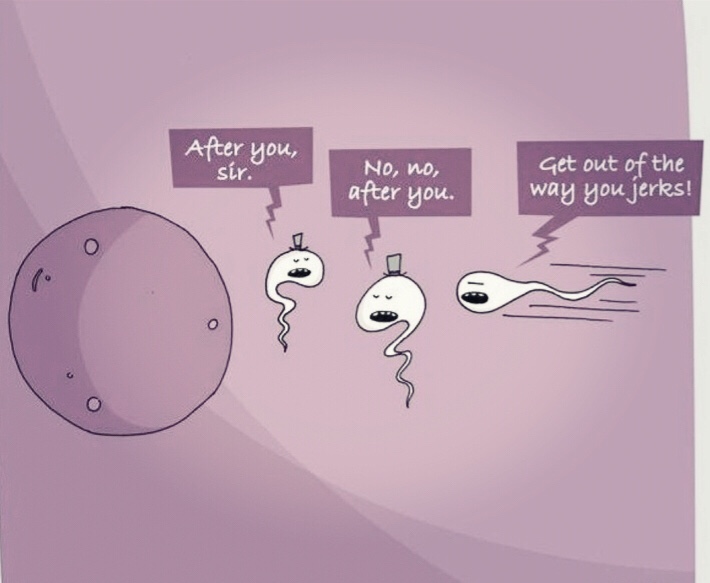
She asked for my name, my date of birth, and then showed me my straw and asked if the identifying information from my donor (sometimes this is a donor ID number or a fake name, depending on your bank) was correct. She asked me some other questions that I don’t remember, because I was fixated on what was in her hand. This tiny tune was filled with some shockingly yellow gunk. If this was sperm, it looked like snot. Gross and unexpected. She finally shook me from my staring with an off-handed comment.
“You picked a good one. This stuff can definitely get someone pregnant.”
I laughed, because I wasn’t sure what to say to that. Thank you? I hope so? That’s what I paid for? None seemed appropriate. The sperm commentary shocked me, but her instructions next were even more surprising. I had to keep the straw warm, preferably at body temperature, so I needed to stick it either in my bra or in my pants for the drive over to my specialist’s clinic. So in the bra it went.
My trek back to the lobby felt treacherous, as if one wrong step would send this yellow snot/sperm falling to the floor. Stepping into the elevator, I found myself standing with strangers, wondering how they would react if they knew that I had a vial of sperm nestled between my boobs. The drive to the clinic was worse, because I kept anticipating some horrific accident or road closure that would prevent me from getting the goods to my specialist within the thirty minute “go window.” In the end it was easy, and we made it there without incident.

While I brought my mom along, I sequestered her to the waiting room. I joked that it was going to be interesting enough to tell my future child that he or she was conceived with two women in the room (me and my fertility specialist), and that adding his/her grandma into the mix was going to be too weird. It was something I needed to do on my own.
The procedure itself was quick. Undress, put on a gown, lie back, wait for the speculum. I opted for an IUI (intrauterine insemination), so my specialist used a thin catheter to deliver the sperm past by cervix. A little pinch, and it was done. It took all of two minutes, and I had to lie on the table for fifteen minutes.

I asked my specialist what people tend to do during this fifteen minutes, because it suddenly felt like an eternity. She said some people visualize success, which was out for me – I’m not good at visualization exercises, and all that I could picture was the opening scene to Look Who’s Talking.
Instead, my specialist left me alone with my phone, and I opted for music to try and relax. I opened the massive playlist that I have and hit shuffle, leaving the first song up to fate, and when the chords started my heart clenched, because of course. It was perfect. Fire away.

I was afraid, I was terrified, but as I listened to the chorus of this song and cried, I allowed myself to feel hope, too. Hope that maybe I would get lucky. Maybe it would work.
 A Ladder to the Stars